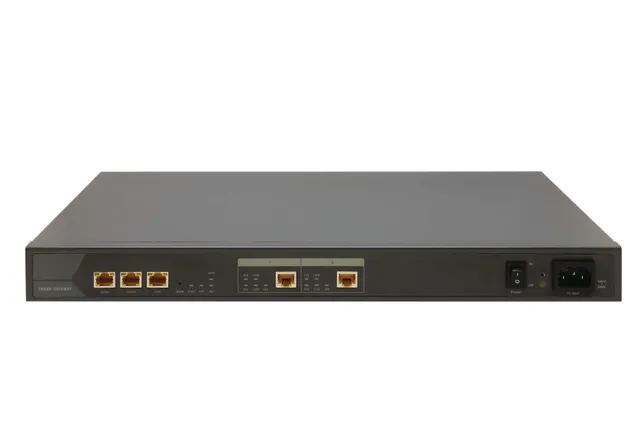
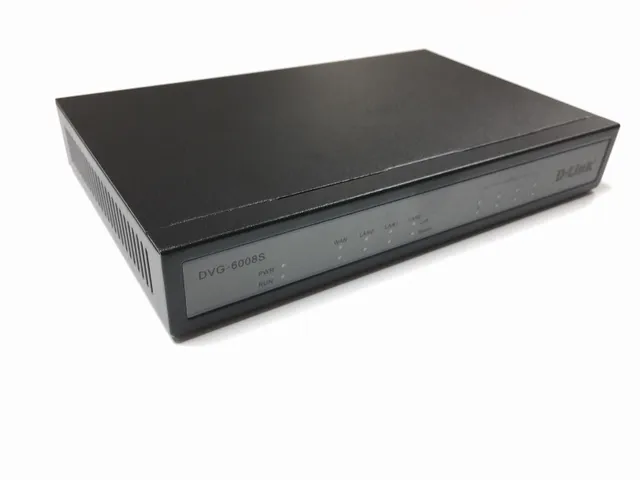
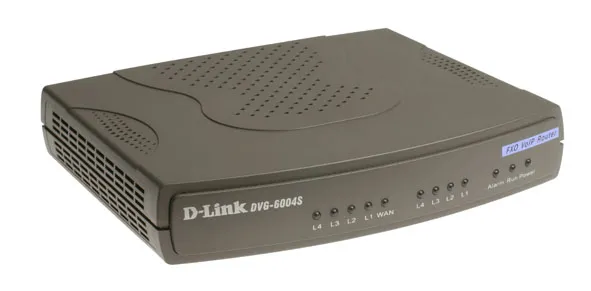
| Device Interfaces | RJ-11 PSTN port (to regular PSTN phone line)
Two RJ-11 FXS ports (to analog phones)
RJ-45 10/100/1000BASE-TX Ethernet WAN port
Four RJ-45 10/100/1000BASE-TX Ethernet LAN ports
802.11n WLAN (wireless connection to computers)
USB 2.0 port
WPS button
Factory reset button
Power ON/OFF switch |
|---|
| Voice Features | G.722 64K
Packet Interval: 20/30/40/50/60 ms
Concurrent Calls: 2 ch @ 20 ms
G.711 a-law 64K
Packet Interval: 20/30/40/50/60 ms
Concurrent Calls: 2 ch @ 20 ms
G.711 μ-law 64K
Packet Interval: 20/30/40/50/60 ms
Concurrent Calls: 2 ch @ 20 ms
G.729 8K
Packet Interval: 20/30/40/50/60 ms
Concurrent Calls: 2 ch @ 30 ms
G.723.1 5.3K/6.3K
Packet Interval: 30/60/90 ms
Concurrent Calls: 2 ch @ 30 ms
G.726 32K
Packet Interval: 20/30/40/50/60 ms
Concurrent Calls: 2 ch @ 20 ms
GSM 6.10 Full Rate 13K
Packet Interval: 20/40/60/80 ms
Concurrent Calls: 2 ch @ 20 ms
iLBC 13.3K
Packet Interval: 30/60/90 ms
Concurrent Calls: 2 ch @ 30 ms
DTMF Detection and Generation
Silence Suppression & Detection
Comfort Noise Generation (CNG)
Voice Activity Detection (VAD)
Echo Cancellation (G.165/G.168)
Adaptive (Dynamic) Jitter Buffer
Call Progress Tone Generation (FXS)
Auto or Programmable Gain Control
Built-in Local Mixer
ITU-T V.152 Voice-band Data over IP Networks |
|---|
| SIP Call Features | Peer to Peer Call
Call Hold / Retrieve
Call Waiting
Call Pick Up
Call Park / Retrieve (SIP Server Required)
Call Forward - unconditional, busy, no answer
Call Transfer - attended, unattended
Do Not Disturb
Speed Dialing
Repeat Dialing
Three-way Calling
MWI (RFC-3842)
Hot Line and Warm Line |
|---|
| Telephony Specifications | In-Band DTMF, Out-of-Band DTMF Relay (RFC2833 or SIP INFO)
DTMF / PULSE Dial Support
Caller ID Generation / Detection:
DTMF
FSK-Bellcore Type 1 & 2
FSK-ETSI Type 1 & 2
FSK-NTT
FSK: Calling Name, Number, Date and Time, VMWI
FXS Metering Pulse:
Polarity Reversal
12 kHz calling tone
16 kHz calling tone
Polarity Reversal Generation (FXS)
T.30 FAX Bypass to G.711, T.38 Real Time FAX Relay
Failsafe Mechanism: FXS Auto or Manual Relay to FXO /PSTN through Hardware Relay or Internal PCM Bus while Network, Service or Power Failure occurs |
|---|
| FXS Line Test and Diagnostics with Visual Alarm Indications | Inward self test:
Loopback - codec
Loopback - analog
SLIC DC power voltage
Tip / Ring DC feed
Ringer
Outward test (GR909 Standard):
REN
Phone line disconnected
H.F. DC voltage (hazardous and foreign DC voltage)
H.F. AC voltage (hazardous and foreign AC voltage)
Tip / ring short
Modem over IP up to V.34
ROH Tone (Receiver Off-Hook Tone @ 480 Hz)
Loop Current Suppression |
|---|
| SIP Account Management | By-Port Registration
By-Device Registration (share account)
Mixed Mode (hunt number for inbound, by port number for outbound)
Invite with challenge
Register by SIP Server IP Address or Domain Name
Supports RFC3986 SIP URI Format |
|---|
| SIP Call Management | Supports outbound proxy
Registers up to three SIP servers
SIP registration failover mechanism
Group hunting
Privacy mechanism / private extensions to SIP
Session timers (update / re-invite)
DNS SRV support
Call types: voice / modem / FAX
Call routing by prefix number
Supports user programmable dial plan
CDR client
Manual peer table (for P2P calls)
E.164 numbering, ENUM support |
|---|
| Wireless | Compliant with IEEE 802.11n/g/b standards
2.4 GHz to 2.484 GHz frequency range
Up to 300 Mbps wireless transmission rate¹
AP & Client modes
Auto rate adaptive
Multi-SSID
Broadcast SSID control
64 /128-bit WEP supported for encryption
WPA-PSK / WPA2-PSK wireless security
WDS repeater function
Universal repeater mode
IAPP (802.11f)
Wi-Fi Multimedia (WMM) for AP mode
WPS (Wi-Fi Protected Setup) for easy setup |
|---|
| IP Network Specifications | Supports IPv4, IPv6 future upgradable (optional)
WAN: Static IP, PPPoE, DHCP, PPTP
Network Protocol Support:
IP, TCP, UDP, TFTP, FTP, RTP, RTCP,RTCP XR, ARP, RARP, ICMP, NTP, SNTP, RIP I & II, SNMP v1/v2c/v3, HTTP, HTTPS, DNS, DNS SRV, Telnet, DHCP Server, DHCP Client, STUN Client, UPnP, IGMP snooping, IGMP proxy
QoS Support:
WAN: DiffServ, IP Precedence, Priority Queue, Rate Control, 802.1Q (VLAN Tagging), 802.1p (Priority Tag)
LAN: Rate Limitation
DDNS support |
|---|
| Network Security Specifications | VPN PPTP Client
DIGEST Authentication
MD5 Encryption
DoS Protection |
|---|
| Management | Web-Based Configuration
Auto-provisioning (HTTP/HTTPS)
Telnet
IVR
FTP/TFTP/HTTP Software Upgrade
Configuration Backup and Restore
Reset to Default Button
TR-069/104 (Option)
USB 2.0 Host (Supports 3/3.5G and SharePort)
SIP ALG/RTSP ALG |
|---|
| SIP, Voice and Fax-Related Standards | RFC1889 RTP: A Transport Protocol for Real-Time Applications
RFC2543 SIP: Session Initiation Protocol
RFC2833 RTP Payload for DTMF Digits, Telephony Tones and Telephony Signals
RFC2880 Internet Fax T.30 Feature Mapping
RFC2976 The SIP INFO Method
RFC3261 SIP: Session Initiation Protocol
RFC3262 Reliability of Provisional Responses in Session Initiation Protocol (SIP)
RFC3263 Session Initiation Protocol (SIP): Locating SIP Servers
RFC3264 An Offer/Answer Model with Session Description Protocol (SDP)
RFC3265 Session Initiation Protocol (SIP) - Specific Event Notification
RFC3311 The Session Initiation Protocol (SIP) UPDATE Method
RFC3323 A Privacy Mechanism for the Session Initiation Protocol (SIP)
RFC3325 Private Extensions to the Session Initiation Protocol (SIP) for Asserted Identity within Trusted Networks
RFC3362 Real-time Facsimile (T.38) - Image/t38 MIME Sub-type Registration
RFC3515 The Session Initiation Protocol (SIP) Refer Method
RFC3550 RTP: A Transport Protocol for Real-Time Applications. July 2003
RFC3665 Session Initiation Protocol (SIP) Basic Call Flow Examples
RFC3824 Using E.164 numbers with the Session Initiation Protocol (SIP)
RFC3841 Caller Preferences for the Session Initiation Protocol (SIP)
RFC3842 A Message Summary and Message Waiting Indication Event Package for the Session Initiation Protocol (SIP)
RFC3891 The Session Initiation Protocol (SIP) “Replaces” Header
RFC3892 The Session Initiation Protocol (SIP) Referred-By Mechanism
RFC3960 Early Media and Ringing Tone Generation in the Session Initiation Protocol (SIP)
RFC3986 Uniform Resource Identifier (URI): Generic Syntax
RFC4028 Session Timers in the Session Initiation Protocol (SIP)
Draft-ietf-sipping-service-examples-08 for call features |
|---|
| Network-Related Standards | RFC318 Telnet Protocols
RFC791 Internet Protocol
RFC792 Internet Control Message Protocol (ICMP)
RFC793 Transmission Control Protocol (TCP)
RFC768 User Datagram Protocol (UDP)
RFC826 Ethernet Address Resolution Protocol (ARP)
RFC959 File Transfer Protocol (FTP)
RFC1034 Domain Names - concepts and facilities
RFC1035 Domain Names - implementation and specification
RFC1058 Routing Information Protocol (RIP)
RFC1157 Simple Network Management Protocol (SNMP)
RFC1305 Network Time Protocol (NTP)
RFC1321 The MD5 Message-Digest Algorithm
RFC1349 Type of Service in the Internet Protocol Suite
RFC1350 TFTP Protocol (Revision 2)
RFC1661 Point-to-Point Protocol (PPP)
RFC1738 Uniform Resource Locators (URL)
RFC2854 The ‘text/html’ Media Type
RFC2131 Dynamic Host Configuration Protocol (DHCP)
RFC2136 Dynamic Updates in the Domain Name System (DNS UPDATE)
RFC2327 SDP: Session Description Protocol
RFC2474 Definition of the Differentiated Services Field (DS Field)
RFC2516 A Method for Transmitting PPP Over Ethernet
RFC2616 Hypertext Transfer Protocol - HTTP/1.1
RFC2617 HTTP Authentication: Basic and Digest Access Authentication
RFC2637 Point-to-Point Tunneling Protocol
RFC2766 Network Address Translation - Protocol Translation (NAT-PT)
RFC2782 A DNS RR for Specifying the location of Services (DNS SRV)
RFC2818 HTTP Over TLS (HTTPS)
RFC2916 E.164 Number and DNS
RFC3022 Traditional IP Network Address Translator
RFC3489 STUN - Simple Traversal of User Datagram Protocol (UDP) through Network Address Translators (NATs) |
|---|
| Power | Input: 100 to 240 V AC, 50/60 Hz
Output: 12 V / 2 A
Power consumption: 14.4 W
MTBF: 50,000 hours |
|---|
| Dimensions | 222 x 145.7 x 33 mm w/o stand
(8.74 x 5.74 x 1.3 inches)
226 x 145.7 x 80 mm w/ stand
(8.9 x 5.74 x 3.15 inches) |
|---|
| Weight | 0.48 kg (1.06 lbs) |
|---|
| Operating Temperature | -10 to 40 °C (14 to 104 °F) |
|---|
| Storage Temperature | -20 to 60 °C (-4 to 140 °F) |
|---|
| Operating Humidity | 10 to 90% relative humidity |
|---|
| Storage Humidity | 5 to 95% relative humidity |
|---|
| Certifications | FCC Part 15B
FCC Part 68
CE Class B
CE/TBR21
CE/LVD |
|---|